
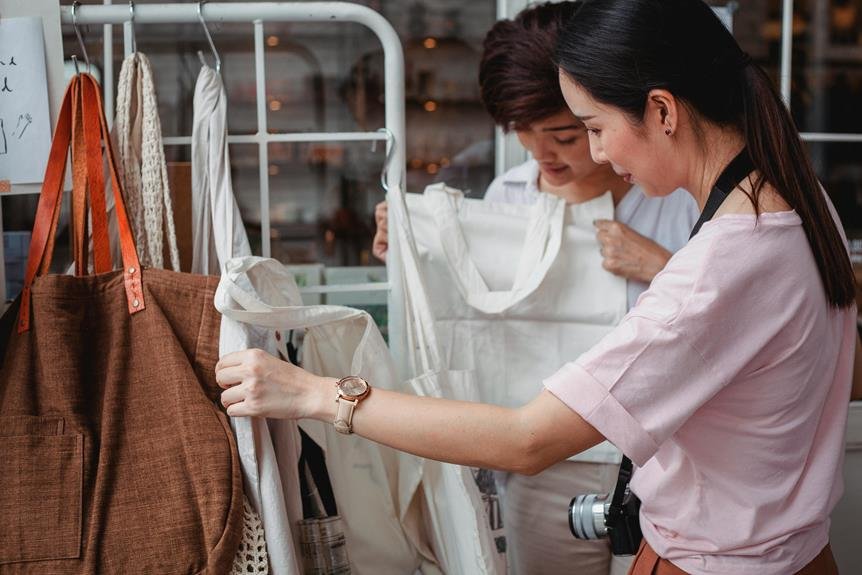
When looking into sustainable fashion, remember key principles like choosing organic or recycled materials, promoting ethical production, and embracing the circular economy model for your purchases. Prioritize brands that support fair labor practices and transparent sourcing, opt for recycled or upcycled items, and consider joining clothing swaps for a sustainable wardrobe.
Materials and Sourcing
When choosing materials for your sustainable fashion pieces, opt for organic cotton or recycled fabrics to minimize environmental impact. By selecting organic cotton, you support farming practices that avoid harmful chemicals and promote soil health. Additionally, recycled fabrics help reduce waste and lessen the demand for new raw materials, contributing to a circular economy.
Embrace the freedom to express your style while making conscious choices about the materials you wear. Seek out brands that prioritize sustainability and transparency in their sourcing practices. Look for certifications like Global Organic Textile Standard (GOTS) or Recycled Content Standard (RCS) to ensure the credibility of the materials used in your clothing.
Remember that your choices matter. By selecting sustainable materials, you contribute to a cleaner and healthier planet. Empower yourself through your fashion decisions, knowing that each piece you choose reflects your commitment to a more sustainable future. Let your wardrobe be a statement of both style and conscience.
Ethical Production
Opt for brands that prioritize fair labor practices and transparent supply chains when seeking ethically produced fashion pieces. By choosing companies that value their workers and ensure transparency in their production processes, you contribute to a more ethical fashion industry. Look for certifications like Fair Trade or B Corp to guide your decisions towards socially responsible brands.
When shopping for ethically produced clothing, consider the working conditions of the people making your garments. Seek brands that provide fair wages, safe working environments, and respect for labor rights. Supporting these companies not only helps to improve the lives of garment workers but also promotes a more sustainable and humane fashion system.
Additionally, prioritize transparency in the supply chain of the clothing you purchase. Brands that openly share information about their sourcing, production methods, and environmental impact are more likely to be committed to ethical practices. By holding companies accountable for their processes, you empower yourself to make informed choices that align with your values and contribute to a more ethical fashion industry.
Circular Economy
Consider embracing the circular economy model to promote sustainability in your fashion choices and contribute to a more eco-conscious industry. In a circular economy, the focus shifts from the traditional linear model of take-make-dispose to one that aims to keep products and materials in use for as long as possible. This means choosing clothes made from recycled or upcycled materials, supporting brands that offer repair services, and participating in clothing swaps or second-hand shopping.
Conclusion
In conclusion, sustainable fashion is centered around key principles such as using eco-friendly materials and ethical production practices.
By embracing a circular economy mindset, the fashion industry can reduce waste and environmental impact.
It's important for consumers to support brands that prioritize sustainability in order to create a more environmentally conscious and ethical fashion industry for the future.