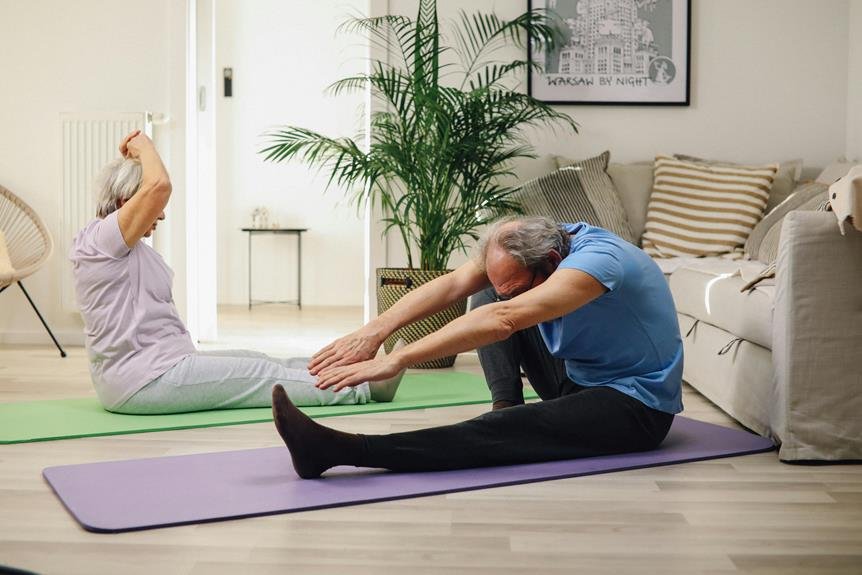
When starting a stretching program as a senior, it's crucial to consult your healthcare provider to ensure it aligns with your health needs and limitations. Customizing stretches based on your abilities and focusing on specific areas in need of attention will help you progress safely towards your flexibility goals. Remember to always warm up before stretching, listen to your body, and maintain proper form and hydration. Following these key considerations will set you on the right path for a beneficial stretching routine tailored to your individual requirements.
Importance of Consulting Healthcare Provider
Before embarking on a stretching program, it's crucial to consult your healthcare provider to ensure it aligns with your current health status and needs. Your healthcare provider can offer valuable insights into any limitations you may have and provide guidance on exercises that suit your individual requirements. By seeking their advice, you can ensure that the stretching program you undertake will be safe and effective for you. Remember, your health and well-being are paramount, so taking this proactive step can set you on the right path towards achieving your flexibility goals.
Additionally, consulting your healthcare provider can help identify any underlying health conditions that may impact your stretching routine. This proactive approach empowers you to make informed decisions about your fitness journey and ensures that you're taking the necessary precautions to prevent any injuries. Embrace the freedom that comes with making informed choices about your health and well-being by consulting your healthcare provider before starting a stretching program.
Tailoring Stretches to Individual Needs
To optimize the benefits of your stretching program, it's essential to tailor stretches according to your individual needs and abilities. Everyone's body is unique, so customizing your stretches ensures you're focusing on areas that need attention most.
If you have tight hamstrings, incorporate stretches specifically targeting this area. For those with lower back issues, gentle stretches that promote flexibility without straining the back muscles are key. Listen to your body – if a stretch feels uncomfortable or causes pain, modify it to suit your comfort level.
As you progress, gradually increase the intensity and duration of your stretches to continue challenging your muscles safely. Remember, the goal is to improve flexibility and mobility while avoiding injury. By personalizing your stretching routine, you can address your body's specific requirements and make the most out of your stretching program.
Enjoy the freedom of movement that comes with tailored stretches designed just for you!
Safety Precautions and Best Practices
For safe and effective stretching, remember to always warm up your muscles before engaging in any stretching exercises. Warming up helps increase blood flow to your muscles, making them more pliable and less prone to injury. It's essential to listen to your body and avoid pushing yourself too hard, especially if you're just starting a stretching program. Gradually ease into each stretch, holding it for about 15-30 seconds and breathing deeply to help relax your muscles.
When stretching, focus on major muscle groups like your calves, thighs, hips, lower back, neck, and shoulders. Ensure proper form during each stretch to prevent strain or injury. It's also crucial to stay hydrated and maintain good posture throughout your stretching routine. If you experience any pain beyond mild discomfort, stop the stretch immediately.
Lastly, remember that consistency is key to seeing improvements in flexibility and mobility. Stretching regularly, at least 2-3 times a week, can help you maintain and even improve your range of motion as you age. Enjoy the freedom that comes with a flexible and healthy body!
Conclusion
In conclusion, remember to always consult your healthcare provider before starting a stretching program as a senior. Tailor your stretches to your individual needs and always practice safety precautions and best practices to avoid any injuries.
Stretching can greatly benefit seniors by improving flexibility, mobility, and overall well-being. So make sure to incorporate stretching into your daily routine for a healthier and happier life.