To enhance your quality of life as a senior, start incorporating strength and resistance training into your routine. By engaging in exercises like single-leg stands, squats, and seated rows, you can prevent muscle loss, improve bone density, and enhance balance and coordination. Remember to warm up properly, maintain good form, and listen to your body for safe and effective training. Embrace the transformative benefits of senior strength training today and unlock a healthier, more vibrant you.
Benefits of Senior Strength Training
Engaging in strength training as a senior can significantly enhance your overall well-being and independence. By incorporating strength and resistance exercises into your routine, you aren't only improving your physical health but also boosting your mental well-being. As a senior, maintaining independence is crucial, and strength training can help you achieve just that.
When you engage in regular strength training, you're actively working to prevent muscle loss, improve bone density, and enhance your balance and coordination. These benefits are essential for maintaining your freedom and reducing the risk of falls or injuries that could limit your mobility. Additionally, strength training can also help alleviate joint pain, improve your posture, and increase your overall energy levels.
Key Exercises for Seniors
To further enhance your physical well-being and maintain your independence as a senior, incorporating key exercises tailored for your age group is vital.
Focus on exercises that improve balance, such as single-leg stands or heel-to-toe walking, to prevent falls and maintain mobility.
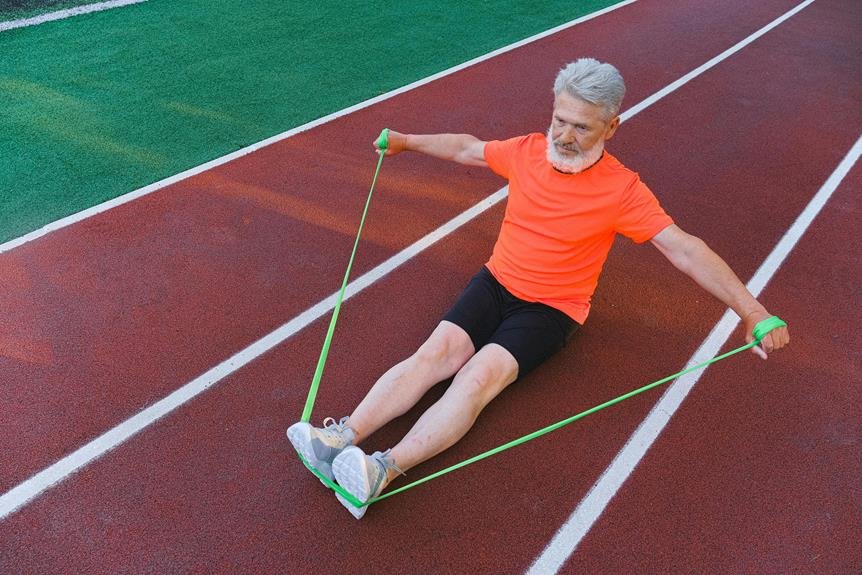
Squats and chair stands are great for strengthening your lower body, while seated rows and chest presses can help maintain upper body strength.
Engage in gentle stretches to keep your muscles flexible and reduce stiffness.
Don't forget about core exercises like planks or bridges to support your spine and improve posture.
Water aerobics or walking are excellent low-impact cardiovascular options to keep your heart healthy.
Remember, consistency is key to seeing improvements in your strength and overall well-being.
Tips for Safe and Effective Training
For safe and effective training, prioritize proper warm-up routines to prepare your muscles and prevent injuries. Begin with light aerobic exercises like walking or cycling to increase blood flow and elevate your heart rate. Incorporate dynamic stretches for major muscle groups, focusing on movements that mimic the exercises you'll be doing. Remember, warming up gradually increases your body temperature, making your muscles more pliable and ready for the workout ahead.
When lifting weights, maintain proper form to avoid strain and maximize the effectiveness of your exercises. Start with lighter weights to master technique before progressing to heavier loads. Listen to your body and rest when needed to prevent overtraining and promote muscle recovery. Hydrate well throughout your training session and replenish electrolytes to support optimal performance. Lastly, cool down with stretches to improve flexibility and reduce muscle soreness post-workout.
Conclusion
If you're looking to enhance your quality of life as a senior, consider incorporating strength and resistance training into your routine. These exercises can improve your overall health, increase muscle mass, and enhance your ability to perform daily activities.
Remember to start slowly, focus on proper form, and listen to your body to avoid injury. With dedication and consistency, you can experience the many benefits of senior strength training.